
Moisture in the car: how desiccants influence air conditioning and vehicle protection

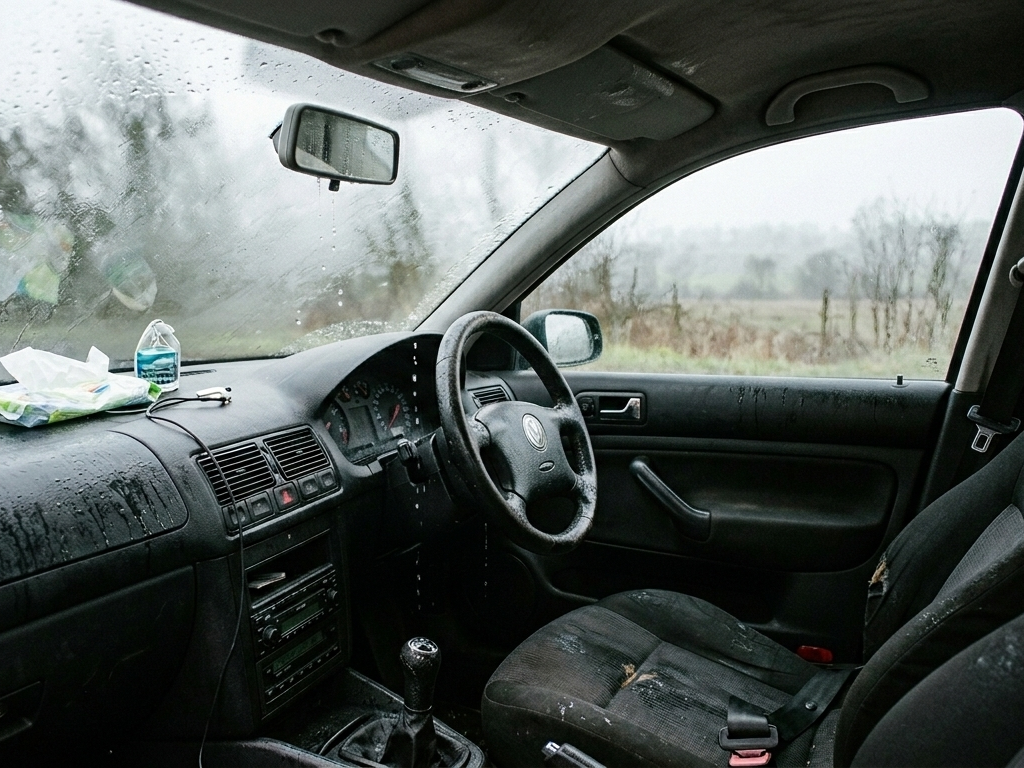
Moisture in the car may seem like a minor issue when it only appears as fogged windows or unpleasant odours. From a technical standpoint, however, its presence directly affects the air conditioning system, metallic components and interior materials of the vehicle.
Controlling moisture not only improves comfort, but also protects the reliability and service life of the car.
Why can moisture in the car cause damage?
Moisture can enter the vehicle through temperature changes, leaks, frequent use of the climate control system or prolonged storage.
When it accumulates, it may lead to:
- Corrosion of metal components,
- Degradation of plastics and seals,
- Persistent odours inside the cabin,
- An increased risk of air conditioning system failures.
For this reason, the automotive industry integrates moisture protection systems at both technical and preventive levels.
The key role of desiccants in air conditioning
Within the air conditioning system, moisture is particularly critical. If not properly controlled, it can react with the refrigerant or lubricant, affecting the performance of the compressor and other components.
To prevent this, manufacturers use automotive desiccant bags specifically designed for refrigeration systems.
These bags:
- Contain high-capacity molecular sieves,
- Are manufactured from durable materials compatible with modern refrigerants,
- Are integrated into the system’s receiver-drier,
- Comply with the stringent quality standards of the automotive industry.
Their primary function is to absorb moisture from the refrigerant and lubricant, maintaining safe levels within the closed circuit.
What types of desiccants are used?
Molecular sieve
This is the most widely used desiccant in internal air conditioning systems.
- High selectivity for water molecules,
- High adsorption capacity,
- Compatibility with refrigerants such as R-134a,
- Long-term stability.
It is essential for maintaining system stability and preventing internal corrosion
Silica gel
More commonly used for storage or environmental protection.
- Good absorption capacity,
- Cost-effective,
- Safe.
It is not usually employed directly within the pressurised circuit, but may form part of auxiliary solutions.
Activated clay (bentonite)
Found in simpler solutions, such as some anti-moisture bags for the vehicle interior.
- Moderate capacity,
- Low cost,
- Use focused more on the cabin than on the technical circuit.
What do studies indicate about moisture and stability?
Laboratory tests and vehicle fleet trials have shown that:
- The amount of desiccant directly influences moisture levels,
- Less desiccant results in higher moisture content,
- However, moderately higher levels do not always cause immediate degradation of the refrigerant or lubricant.
This means that modern systems tolerate small variations more effectively, but the desiccant remains a key component for long-term stability.
The current trend is not to eliminate moisture entirely, but to keep it within safe limits.
Visible moisture in the car: the issue perceived by the driver
For drivers, moisture in the car is typically detected through:
- Unpleasant smells,
- Fogged windows,
- A sensation of stale air.
In these situations, the following are commonly used:
- Products to remove damp odours from the car,
- Car moisture absorbers,
- Small reusable anti-moisture bags,
- Containers with absorbent salts.
While these moisture absorbers help improve the interior environment, they do not replace the technical function of the desiccant within the air conditioning system.
In CKD manufacturing and assembly
In CKD (Completely Knocked Down) assembly processes, moisture control is also relevant during the transport and storage of components.
In such cases, the following are used:
- Industrial desiccant bags,
- Moisture protection systems during logistics,
- Absorbent materials in technical packaging.
As a result, the risk of corrosion prior to final vehicle assembly is reduced.
Moisture in the car affects both comfort and the technical durability of the vehicle.
Inside the air conditioning system, molecular sieve desiccant bags play an essential role in maintaining stability and preventing damage, while in the cabin, solutions such as anti-moisture bags complement protection.
The balance between internal technology and preventive maintenance is the most effective strategy for long-lasting moisture protection.


CONTACT US
We are characterised by our attention, flexibility, speed and delivery reliability. The best personalised service with a reliable supplier for regular deliveries.