
Humidity in Shipping Containers: Causes, Risks and Technical Solutions to Prevent Condensation in International Transport
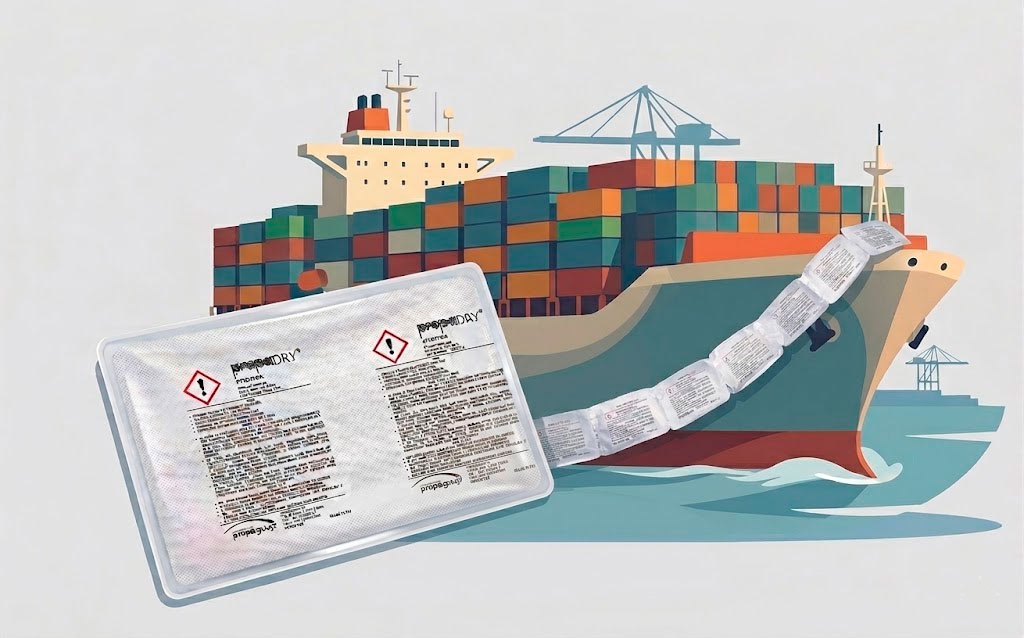
Maritime transport accounts for more than 80% of global trade, and most of these goods are shipped in containers. However, one of the most common problems affecting these shipments is moisture in shipping containers, a phenomenon that can lead to product deterioration, damage to packaging and significant financial losses.
During a journey that can last several weeks, the container passes through different climate zones, temperature variations and changes in humidity, which can lead to internal condensation, known in logistics as container rain or container sweat.
This phenomenon particularly affects sensitive products such as food, pharmaceuticals, machinery, steel, textiles or electronics, where even small variations in humidity can cause quality or safety issues.
Understanding the causes of moisture in containers and implementing appropriate control strategies is essential for protecting goods during international transport.
What is condensation in shipping containers
Condensation in containers occurs when the water vapour present in the air inside reaches the dew point, turning into water droplets.
This phenomenon usually occurs when:
- the air inside contains high levels of moisture
- the metal walls of the container cool rapidly
- the temperature drops below the dew point
When this happens, the water vapour condenses into droplets on the ceiling and walls of the container. These droplets can then fall onto the cargo, causing the phenomenon known as “container rain”.
Why does moisture occur in shipping containers?
The formation of condensation in shipping containers is the result of several combined factors.
Temperature fluctuations during transport
Metal containers can experience extreme temperature fluctuations during a sea voyage.
These changes cause repeated cycles of evaporation and condensation, which progressively increase the humidity inside the container.
Moisture present in the goods
Many transported products contain natural moisture that is released during the journey. Among the materials that release the most moisture are wood, cardboard, paper, textiles and agricultural products.
For example, wooden pallets can contain between 8% and 18% moisture, which evaporates slowly during transport.
Hygroscopic packaging materials
Packaging materials can also act as moisture reservoirs.
Some materials, such as corrugated cardboard, paper, textile sacks and wooden pallets, can absorb moisture prior to loading and subsequently release it inside the container.
Poor container ventilation
Standard shipping containers have very limited ventilation. This means that the water vapour generated inside the container remains trapped throughout the journey, particularly on long-haul routes.
Consequences of moisture in maritime transport
Condensation can cause a range of problems for the goods being transported.
Metal corrosion
Metal parts and industrial machinery are particularly sensitive to moisture.
Relatively low levels of relative humidity can cause: surface rust, corrosion and deterioration of components.
Mould growth
Relative humidity above 60–70% promotes the growth of mould and fungi, which can render the goods completely unusable.
This can particularly affect textiles, wood, food and paper.
Deterioration of packaging
Moisture can also cause cardboard boxes to warp, lose structural strength and collapse.
Problems with food and pharmaceutical products
In sensitive products such as food or medicines, moisture can directly affect product stability, both in terms of food safety and pharmaceutical quality. For this reason, effective humidity control throughout the supply chain is essential.
Industries most affected by moisture in containers
The problem of condensation in containers particularly affects sectors that transport moisture-sensitive goods.
Among the most affected sectors are: food exports, the pharmaceutical industry, electronics, industrial machinery, steel, metallurgy and textiles.
On long sea routes, particularly in intercontinental transport, the risk of condensation increases significantly.
How to prevent moisture in shipping containers
To reduce the risk of condensation in containers, logistics companies apply various environmental control strategies aimed at keeping relative humidity under control throughout the entire sea journey.
Use of desiccants for shipping containers
One of the most effective solutions for moisture control in maritime transport is the use of industrial container desiccants.
Among these solutions, Propadry moisture absorbers for containers stand out; a system designed to absorb moisture during international transport and protect goods from the effects of condensation.
Propadry desiccants use anhydrous calcium chloride, a highly hygroscopic material capable of capturing large amounts of water vapour present in the air. By absorbing moisture, the relative humidity inside the container is reduced, minimising the formation of condensation.
How to position desiccants inside the container
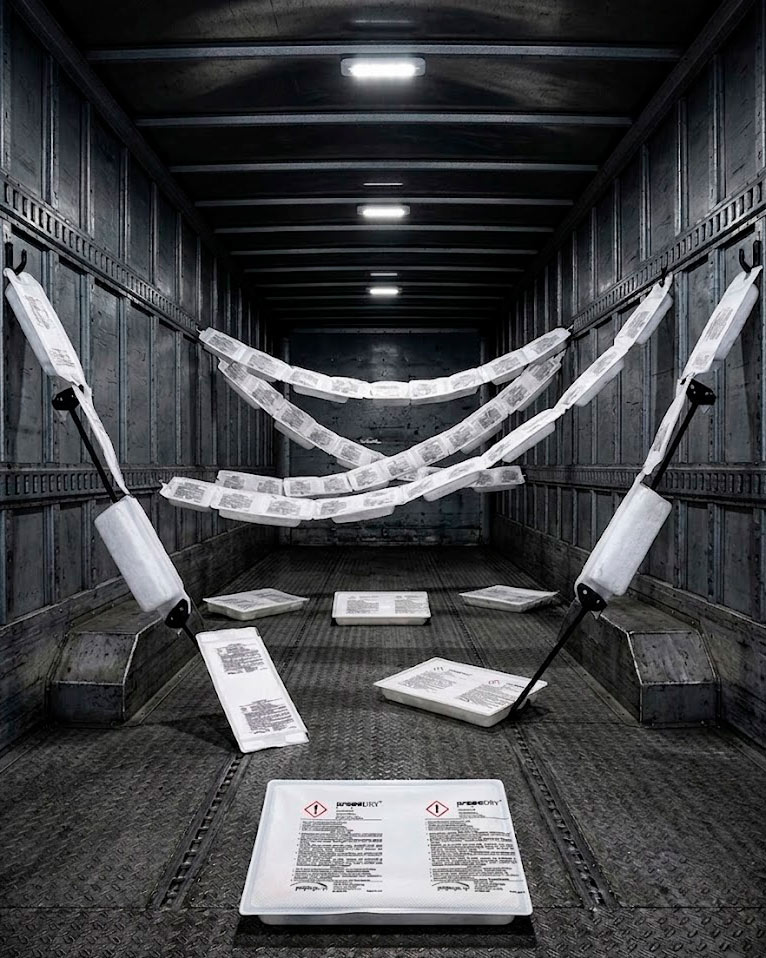
To maximise their effectiveness, moisture absorbents for shipping containers are strategically positioned within the cargo unit. The most common configurations are:
- Hung on the container walls, allowing for continuous absorption of water vapour.
- Distributed amongst the cargo, particularly for moisture-sensitive goods.
- Placed in industrial absorbent trays or bags, designed to capture large volumes of condensation.
This combination of solutions helps maintain a controlled microclimate inside the container.
Proper preparation of the cargo
Before loading a container, it is essential to check that:
- the goods are completely dry
- the container has no residual moisture
- the pallets are not wet
Temperature and humidity monitoring
More and more companies are using sensors and data loggers to monitor environmental conditions during transport.
These devices record temperature, relative humidity and fluctuations during transit. They facilitate the detection of problems and improve logistics management.
The importance of humidity control in international trade
In an increasingly demanding global trade environment, humidity control in containers has become a key factor in protecting product quality during transport.
The implementation of solutions such as Propadry or Container Dry, alongside good loading practices and environmental monitoring, significantly reduces the risks associated with condensation.
As supply chains become more complex and shipments travel ever-greater distances, humidity management is establishing itself as an essential factor in ensuring the safety and stability of goods in maritime transport.


CONTACT US
We are characterised by our attention, flexibility, speed and delivery reliability. The best personalised service with a reliable supplier for regular deliveries.