
Food loss and waste: prevention starts with proper preservation
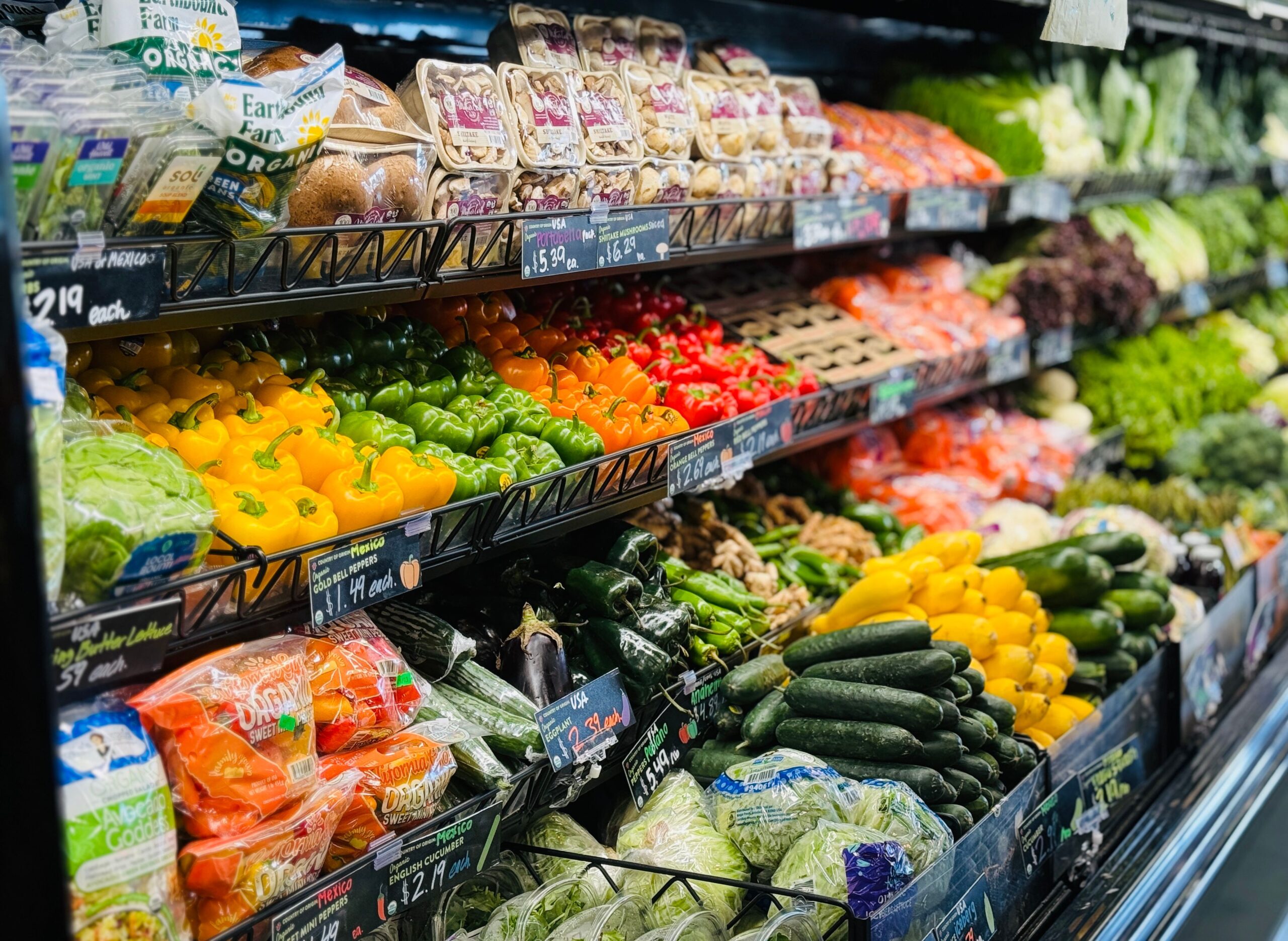
Every 29 September, the International Day of Awareness of Food Loss and Waste once again draws attention to an issue that affects the entire food supply chain.
In 2026, the United Nations and the FAO are focusing this international day on the transformative potential of reducing food loss and waste. Making better use of the food we have already produced also protects resources, reduces environmental impacts and improves productivity.
The figures give an indication of the scale of the problem: around 13.3% of food is lost globally after harvesting and before reaching the retail stage. This is in addition to the food waste subsequently generated by households, food services and retail.
But when we consider the issue from the day-to-day perspective of a food business, one question arises:
At what point does food actually start to be lost?
Not necessarily when it is discarded.
Sometimes, the problem began days or weeks earlier: a temperature deviation, unsuitable humidity conditions, poor planning, inadequate packaging, an impact during transport or storage conditions that failed to meet the product’s requirements.
By the time we see the consequences, the cause may lie much further back in the supply chain.
This is why it is important to anticipate the risks that may compromise food preservation during storage, handling and transport.
What is the difference between food loss and food waste?
The FAO defines food loss as a decrease in the quantity or quality of food resulting from decisions and actions by food supply chain actors before the retail stage.
Food waste, on the other hand, occurs mainly at the retail, food service and consumer stages.
This distinction is important because it helps define where action can be taken within each part of the supply chain.
For producers, manufacturers, distributors and logistics operators, this means focusing on everything that happens before food reaches the point of sale: production, handling, storage and transport.
And it is precisely during these stages that losses may occur which can be avoided through better prevention.
What can cause losses during preservation and transport?
There is no single answer because not all foods require the same type of protection.
A refrigerated product does not face the same risks as a dry food, just as fresh fruit does not behave in the same way as a packaged product that is sensitive to oxygen.
The composition and shelf life of the food, its packaging, environmental conditions, storage time, logistics route and handling are some of the factors that need to be taken into account.
Temperature and the cold chain
For refrigerated, frozen and other temperature-sensitive foods, maintaining the specified temperature conditions is essential.
Risks can arise inside a refrigerated vehicle, but also during loading or unloading, while goods are waiting, during intermediate storage or as a result of an incident at any other point in the cold chain.
The scale of the problem is considerable. The FAO estimates that 526 million tonnes of food, around 12% of the global total, are lost or wasted due to insufficient refrigeration. Factors identified include inadequate refrigeration, temperature monitoring and storage.
To achieve greater control over the cold chain, it is important to consider the food product’s entire journey.
Humidity and condensation
Humidity can also become a preservation issue, affecting both certain foods and their packaging.
Changes in temperature, relative humidity, material permeability and the formation of condensation can alter the microclimate surrounding the product.
However, before deciding how to respond, we need to understand where the moisture comes from, when it appears and what we need to protect.
For dry foods and other moisture-sensitive products, answering these questions is essential when choosing an appropriate strategy.
Oxidation
Oxygen is another factor that can compromise the quality of certain foods.
But once again, it cannot be considered in isolation.
The food itself, the packaging system, the permeability of the materials and the expected conditions throughout its shelf life all determine the level of risk and the appropriate preservation strategy.
Fruit and vegetable ripening
Fresh produce presents its own challenges.
Temperature, humidity, ventilation, handling and physiological processes associated with ripening can influence how fruit and vegetables develop during storage and distribution.
For certain fruit and vegetable products, ethylene also plays an important role in these processes. Managing it appropriately can form part of a strategy designed to preserve the product for longer under the required conditions.
Impacts, shocks and handling
Sometimes preservation problems are not environmental. Goods can travel at the correct temperature and still arrive damaged.
Impacts, vibrations, compression, drops or improper handling during loading, unloading, palletisation and transport, for example, can cause visible damage as well as damage that may not be immediately apparent.
In some cases, the consequences only emerge later, in the form of deterioration, loss of quality or a reduction in the food product’s shelf life.
Planning and storage
A properly packaged product may also remain in storage for longer than expected or under conditions that do not meet its requirements.
Poor forecasting, logistics delays or insufficient coordination between the different parties in the supply chain can unnecessarily prolong its exposure to certain risks.
Preservation therefore also depends on how we plan the product’s journey.
The cost of food loss goes beyond the product itself
When a food product can no longer be sold, the financial loss is obvious.
Goods may need to be replaced, new transport arranged, a claim managed, the affected product destroyed or otherwise handled, and working hours spent investigating what went wrong.
And perhaps the greatest cost of all: loss of trust.
If goods repeatedly arrive in poor condition, the relationship between supplier and customer can suffer. And if there is insufficient information to identify where an incident occurred, disagreements may arise between manufacturers, distributors, carriers and recipients.
There is also the impact on resources.
When food that has been produced is ultimately not consumed, some of the water, energy, raw materials, labour, storage and transport required to bring it to that point are also wasted.
Preventing losses therefore has a direct impact on profitability, efficiency, quality, trust, sustainability and risk management.
Prevention before management: complying with legislation
In Spain, prevention has also taken on a new dimension with Law 1/2025 of 1 April on the prevention of food loss and waste.
The legislation establishes prevention as the first priority and sets out obligations for the operators within its scope, taking into account the specific circumstances and exemptions established by the law itself.
It also incorporates good practices directly related to preservation, including the provision of suitable infrastructure to ensure that handling, storage and transport take place under conditions that minimise losses, as well as the development of specific protocols to reduce losses during these stages.
Knowing where losses occur and understanding why they happen is becoming increasingly important for the effective management of the food supply chain.
Every risk requires a different response
If the causes are different, the solutions need to be different too.
There is no universal answer to food losses caused by inadequate preservation.
First, we understand the problem. Then we look for the solution.
If the risk is temperature
We may simply need to know whether a particular temperature threshold has been exceeded. In other cases, we may need to know how long the deviation lasted or have access to a complete record of what happened during transport.
For other applications, the priority may be to maintain specific thermal conditions.
Temperature indicators, data loggers, monitoring systems and insulated packaging solutions address different requirements.
The appropriate technology therefore depends on what we need to control and what information we need to obtain.
If the problem is humidity
Before selecting a desiccant, we need to understand why moisture is present and what we need to protect.
Relative humidity, temperature fluctuations, dew point, material permeability, storage time and product characteristics can completely change the approach required.
Only after assessing these variables does it make sense to consider desiccants, vapour barrier materials, humidity control solutions or monitoring systems.
If there is a risk of oxidation
For certain foods, controlling the presence of oxygen may be necessary to help maintain the required preservation conditions.
Oxygen absorption or control systems can form part of this strategy, but they should not be selected in isolation.
The food, its packaging, the materials used and the expected conditions throughout its shelf life must all be taken into account.
If we need to manage ripening
For fruit and vegetables, the appropriate response once again depends on the product.
Temperature, humidity, ventilation, ripeness, packaging, environmental conditions and the logistics route can all influence the strategy.
Where ethylene is a relevant factor, solutions designed to control it can help manage the process, always taking the specific requirements of the product as the starting point.
If damage occurs during transport
When we suspect that the problem lies in handling or transport, we need evidence.
Impact and tilt indicators and monitoring systems can help detect certain incidents and provide information about what happened.
Because knowing that damage has occurred is important, but knowing where and how it is happening brings us much closer to being able to prevent it.
Monitoring to move from reaction to prevention
Many companies do not know the origin of an incident:
Was there a temperature deviation? How long did it last?
Did condensation occur during storage or transport?
Does damage repeatedly occur along a particular route?
Does it happen during transit or during loading and unloading operations?
When data is lacking, finding the answers is difficult.
This is why monitoring and data logging provide greater insight into the actual conditions experienced by a product. From there, we can analyse patterns, review processes, modify storage or transport conditions and identify critical points within the supply chain.
SDG 12: reducing losses means making better use of resources
Preventing food loss and waste is also part of the United Nations 2030 Agenda.
Target 12.3 of SDG 12: Responsible Consumption and Production aims to halve global per capita food waste at retail and consumer levels by 2030 and reduce food losses along production and supply chains, including post-harvest losses.
Translated into the day-to-day reality of a business:
If we ensure that food reaches its destination in the right condition, we make better use of all the resources already invested in producing, preserving and transporting it.
It is about preventing avoidable losses and making better use of the resources available.
Assessing each case for better prevention
Two companies may transport a similar food product and face completely different problems.
Packaging, storage time, journey duration, mode of transport, climatic conditions, handling and quality requirements can all vary.
This is why prevention starts with understanding the problem.
At Sercalia, we analyse each application to identify the factors that may compromise the preservation, protection or monitoring of the product and assess the most appropriate measures for each specific case.
Temperature, humidity, oxidation, ripening, impacts and transport conditions are different risks.
And they require different responses.
29 September: from awareness to prevention
The International Day of Awareness of Food Loss and Waste encourages us to look at a global problem.
But businesses can also start by asking some very specific questions:
Where are our losses occurring?
Do we know why they happen?
Do we have enough information to identify when an incident occurs?
Are we preserving, storing and transporting each product according to its specific requirements?
Understanding the product, its journey and the risks to which it is exposed is the first step towards identifying the areas where we can take action.
Do you know what is causing losses during the preservation or transport of your products?
At Sercalia, we assess each application individually to identify the risks associated with food preservation, protection and monitoring and determine the most appropriate solutions for each supply chain.
Ask our team for technical advice.


CONTACT US
We are characterised by our attention, flexibility, speed and delivery reliability. The best personalised service with a reliable supplier for regular deliveries.